Metalized Finishes for Luxury Packaging: Caps, Closures & Bottles
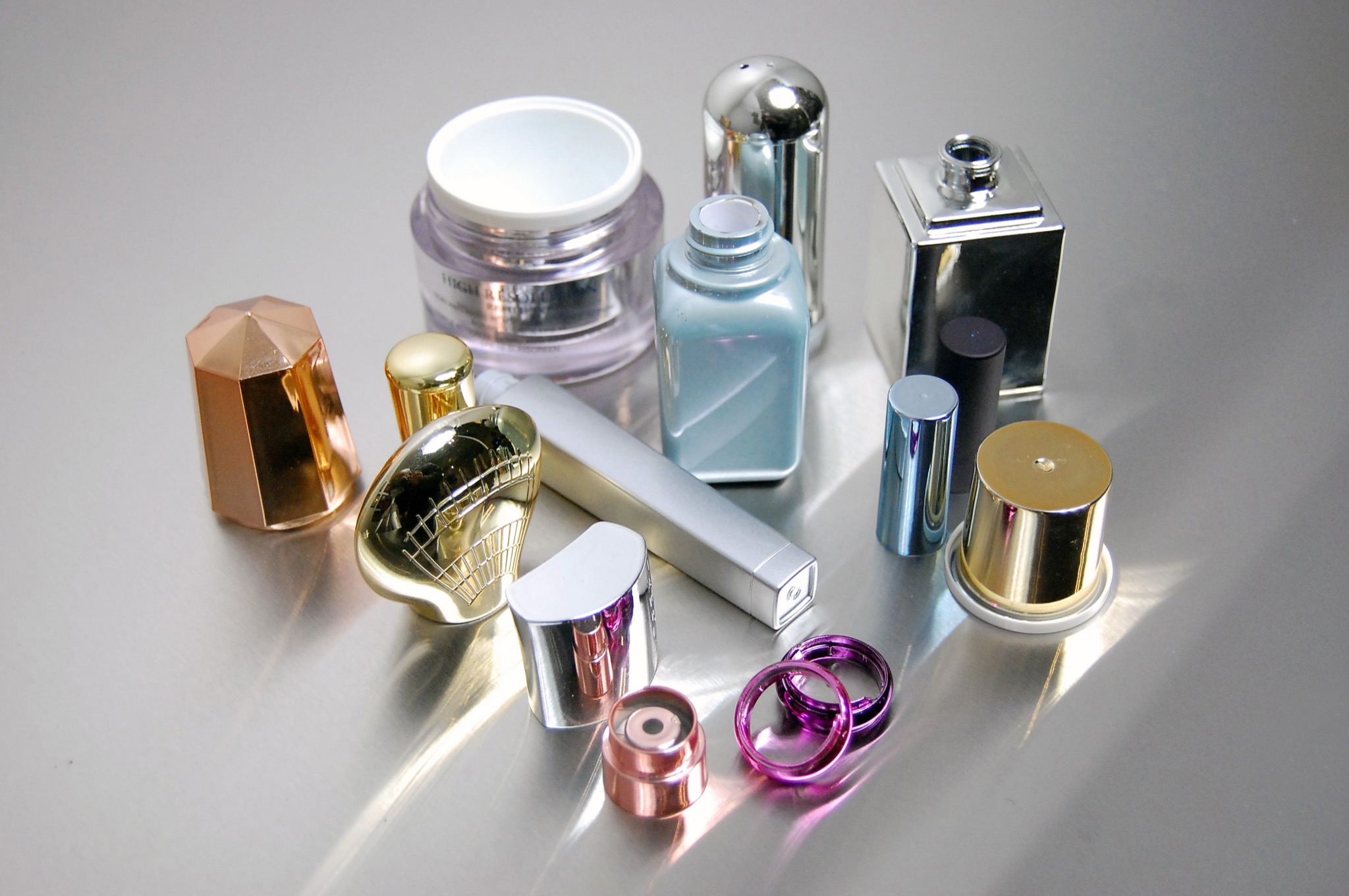
Metalized packaging finishes give plastic and glass packaging components the look of polished metal by depositing a thin aluminum film onto the part in a vacuum chamber, then sealing it under a clear or tinted topcoat. For cosmetics, fragrance, and spirits brands, it is the standard way to achieve chrome, gold, or colored-metal caps, closures, and bottle accents at production volume — on lightweight, moldable substrates like PET, PP, and ABS, and on glass.
Why Luxury Brands Metalize Packaging
On a retail shelf, the finish is the first thing a customer reads. A metalized closure signals weight, precision, and price point before the product is ever touched. Compared with molding in metallic-pigment resin or applying metallic paint, vacuum metalizing delivers a true specular metal surface — the reflection comes from real aluminum, not flakes in a binder — so the part reads as machined metal rather than silver plastic.
The commercial logic is just as strong. A metalized PP or ABS cap costs a fraction of a machined or die-cast metal one, weighs far less (which matters across a freight program), and molds into shapes metal fabrication can't economically produce. Brands get metal presence with plastic economics.
Where Metalized Finishes Are Used
- Cosmetics and skincare: lipstick cases, compact lids, jar caps, mascara closures, and airless-pump collars in chrome, gold, and custom tints.
- Fragrance: cap and collar sets, decorative shoulders, and shields — components where houses like Estée Lauder set the benchmark for finish quality.
- Spirits and wine: bar-top closures, cap shells, and decorative bottle accents in bright chrome, gunmetal black chrome, and rich golds.
- Personal care and home fragrance: razor handles, diffuser collars, and premium tube caps.
Mueller's decorative caps and closures coatings serve exactly this market, backed by a library of more than 50 finishes and custom color matching to brand standards.
Substrates: PET, PP, ABS — and Glass
Packaging components arrive in a wider mix of materials than most industrial work, and the metalizing stack is engineered per substrate:
| Substrate | Typical Packaging Use | Finishing Notes |
|---|---|---|
| PET | Bottles, jars, thick-wall cosmetic containers | Excellent clarity base; basecoat matched for adhesion |
| PP | Caps, closures, pump components | Low-surface-energy resin; requires proper surface treatment before basecoat |
| ABS | Premium caps, compacts, decorative shells | The workhorse for high-end metalized closures |
| Glass | Bottles, jars, decorative accents | Metalized directly for mirrored and tinted-metal effects |
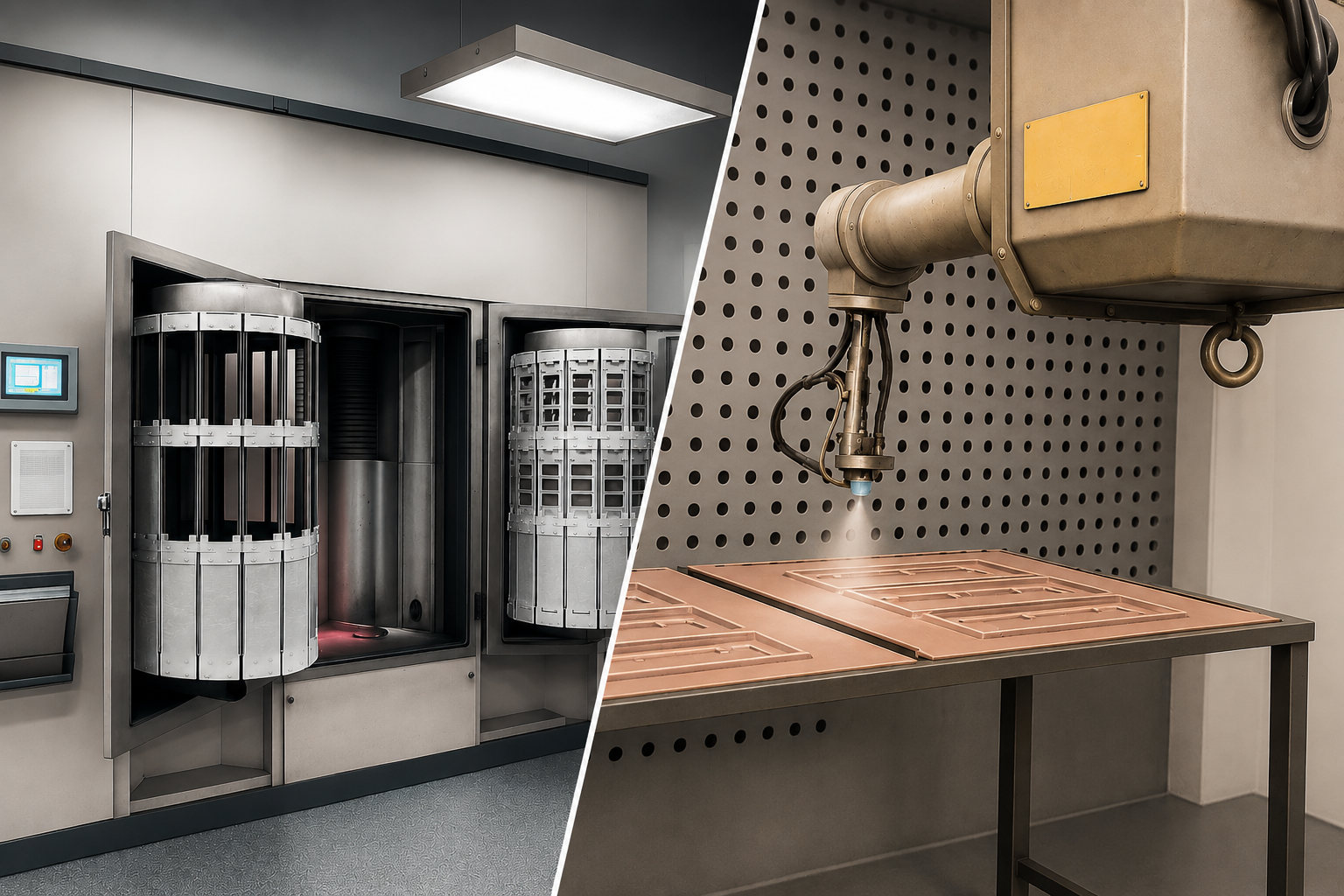
Across all substrates the metal layer itself is the same: vacuum-evaporated aluminum, 0.5 microns thick, applied by the process described on our vacuum metalizing technology page. What changes is the basecoat chemistry, surface preparation, and fixturing — which Mueller builds in-house to protect sealing surfaces and thread engagement zones during coating.
Beyond Bright Chrome: Color and Texture
Tinted topcoats over the aluminum produce golds, rose tones, black chrome, and saturated jewel colors while preserving metallic depth — a decisive advantage for brand differentiation, since the same closure tool can yield an entire finish family. Selective masking, gradients, and pairing metalized components with painted ones extend the design space further; see the options on our decorative vacuum metalizing and painting page.
Production Reality: Volume, Consistency, Compliance
Packaging programs live and die on consistency at volume. Mueller finishes more than 50 million parts annually and imposes no minimum order quantity, so the same finish runs from a 50-piece launch sample through multi-million-piece production. Batch vacuum processing keeps part-to-part appearance tight, and quality is managed under ISO 9001:2015. Because the process uses evaporated aluminum rather than plating chemistry, there is no hexavalent chromium anywhere in the finish — increasingly a hard requirement in cosmetics and spirits supply chains.
Incoming part quality matters as much as the coating itself. Mueller works with molders and brand packaging engineers up front on resin selection, gate placement, and handling, because a metalized finish will faithfully reproduce — and amplify — any sink mark or flow line beneath it. Getting the substrate right before launch is the cheapest quality decision in the entire program.
Work with Mueller Coatings
Mueller Coatings has been metalizing decorative components since 1955 from its 65,000 sq. ft. facility in East Bridgewater, Massachusetts. If you are developing a cap, closure, or bottle program — or re-shoring one — request a quote and our team will recommend the right substrate, finish, and fixturing approach for your package.
Can metalized finishes survive cosmetic formulas and alcohol contact?
Yes, when the topcoat is selected for the exposure. Topcoat systems are specified against the product chemistry — fragrance oils, alcohol, actives — and validated before production.
Do metalized closures work with induction seals and liners?
Generally yes. The coating stack is thin films only, so threads, liners, and sealing geometry are preserved; fixturing masks critical sealing surfaces where required.
What is the largest packaging component you can metalize?
Mueller's vacuum chambers accept parts up to 24 inches in diameter and 60 inches long — ample for bottles, large jars, and multi-part decorative assemblies.