Helping Consumer Electronics Pass EMC: Shielding Coatings for Housings

An EMC compliance coating is a conductive layer — vacuum metalized aluminum or a nickel-, copper- or silver-based spray — applied to the inside of a plastic housing to reduce radiated emissions and improve immunity. For consumer electronics teams facing a failed pre-compliance scan, it is often the fastest fix available: the existing molded housing is shielded as-is, with no board respin, no new tooling and no industrial-design changes. Conductive sprays deliver 40–80 dB of attenuation and vacuum metalized aluminum exceeds 60 dB.
The Pre-Compliance Failure Scenario
The pattern is familiar. A product works flawlessly on the bench, then the pre-compliance chamber shows radiated-emissions peaks above the FCC or CISPR limit line — often harmonics of a clock, a switching regulator or a high-speed interface. The schedule has no room for a board redesign, the enclosure tooling is cut, and marketing has locked the industrial design.
Board-level fixes (ferrites, layout changes, board-mounted cans) attack the source but cost respins and requalification. Shielding the enclosure attacks the path instead: coat the interior of the plastic housing so the whole enclosure becomes a shield. Because the coating goes on parts you already have, molded in ABS, ABS/PC or polycarbonate, the change is invisible to the user and to your tooling budget. The same logic works proactively: teams that shield the housing from the first prototype build give themselves compliance margin, then reduce or remove the coating only if chamber data proves it unnecessary. Mueller Coatings has been applying exactly this remedy through its EMI/RFI/ESD shielding coatings service.
Two Ways to Shield a Plastic Housing
Vacuum metalized aluminum
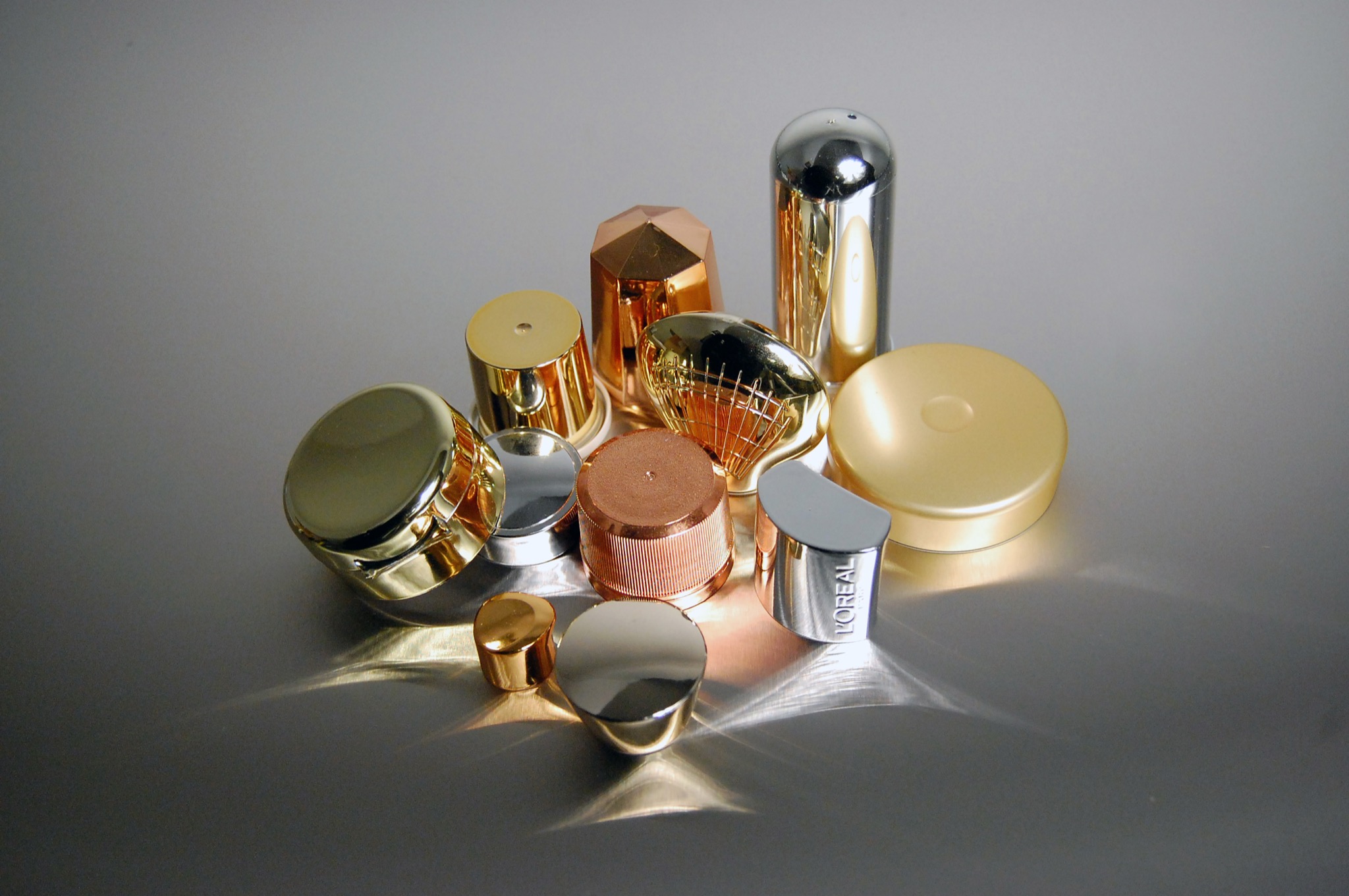
Mueller’s vacuum metalizing process deposits a 0.5–25 micron aluminum film with excellent uniformity, achieving greater than 60 dB of attenuation. Because the film is so thin, snap fits, bosses and tight assembly clearances are unaffected — important when the housing was never designed with a coating in mind.
Conductive spray coatings
Nickel-, copper- or silver-based sprays go on at 1–2 mils (25–50 microns; up to 10 mils) and deliver 40–80 dB. Spray application makes it easy to build thickness at grounding contact points and to keep the coating selective: shielded over the noisy electronics, absent over antennas, LEDs, light pipes and cosmetic surfaces.
Choosing an Approach for a Retrofit
| Factor | Vacuum metalized aluminum | Conductive spray |
|---|---|---|
| Thickness added | 0.5–25 microns | 1–2 mils (25–50 microns; up to 10 mils) |
| Attenuation | Greater than 60 dB | 40–80 dB |
| Selective areas and grounding pads | Achieved with masking fixtures | Very flexible; thickness can be built locally |
| Fit for retrofit programs | Best when clearances are tight and volumes high | Best for fast iteration and complex interiors |
From Failed Scan to Passing Report
A retrofit shielding program usually runs in three steps. First, an applications review: your team identifies the offending frequencies and suspect apertures, and coating engineers map which interior surfaces to coat and where the coating should contact PCB ground — a shield without a solid ground reference underperforms. The same conductive layer also improves ESD behavior, giving discharge currents a controlled path to ground instead of a route through the electronics, and immunity improves alongside emissions — the shield that keeps clock harmonics in also keeps external RF fields out. Second, coated samples: because Mueller has no minimum order quantity, a small batch of housings can be coated for chamber verification before any production commitment. Third, production: in-house fixtures lock in the masking geometry so every housing matches the validated samples, under an ISO 9001:2015 quality system. Applied coatings run on the same spray coating technology used across Mueller’s functional coating lines.
Two design details deserve attention even in a retrofit. Seams between coated housing halves should overlap or contact so the shield is continuous, and any opening that must stay open — ports, vents, displays — should be reviewed, since apertures set the ceiling on real-world shielding performance. Both details cost little to address during the coating review and are far cheaper than another failed chamber session.
Work with Mueller Coatings. Mueller Coatings has finished parts since 1955 and today processes more than 50 million parts annually in East Bridgewater, Massachusetts, from prototype quantities to full consumer-scale volumes. If your product is fighting an EMC limit line, request a quote and get an applications engineer’s read on your housing.
Do we need to redesign our housing to add shielding?
Usually not. The coating is applied to the interior of your existing molded parts; masking handles antennas and cosmetic zones, and film thickness is low enough that assembly fits are preserved.
How much attenuation will the coating provide?
Vacuum metalized aluminum provides greater than 60 dB and conductive sprays 40–80 dB. Achieved system-level reduction depends on grounding, seams and apertures, which is why sample housings are verified in the chamber before production.
What plastics can be coated?
ABS, ABS/PC, polycarbonate, nylon (PA), polystyrene, SAN, PET, PP, HDPE and even 3D-printed parts are all coatable, so prototypes and production housings can use the same process.