EMI Shielding for EV and Automotive Electronics

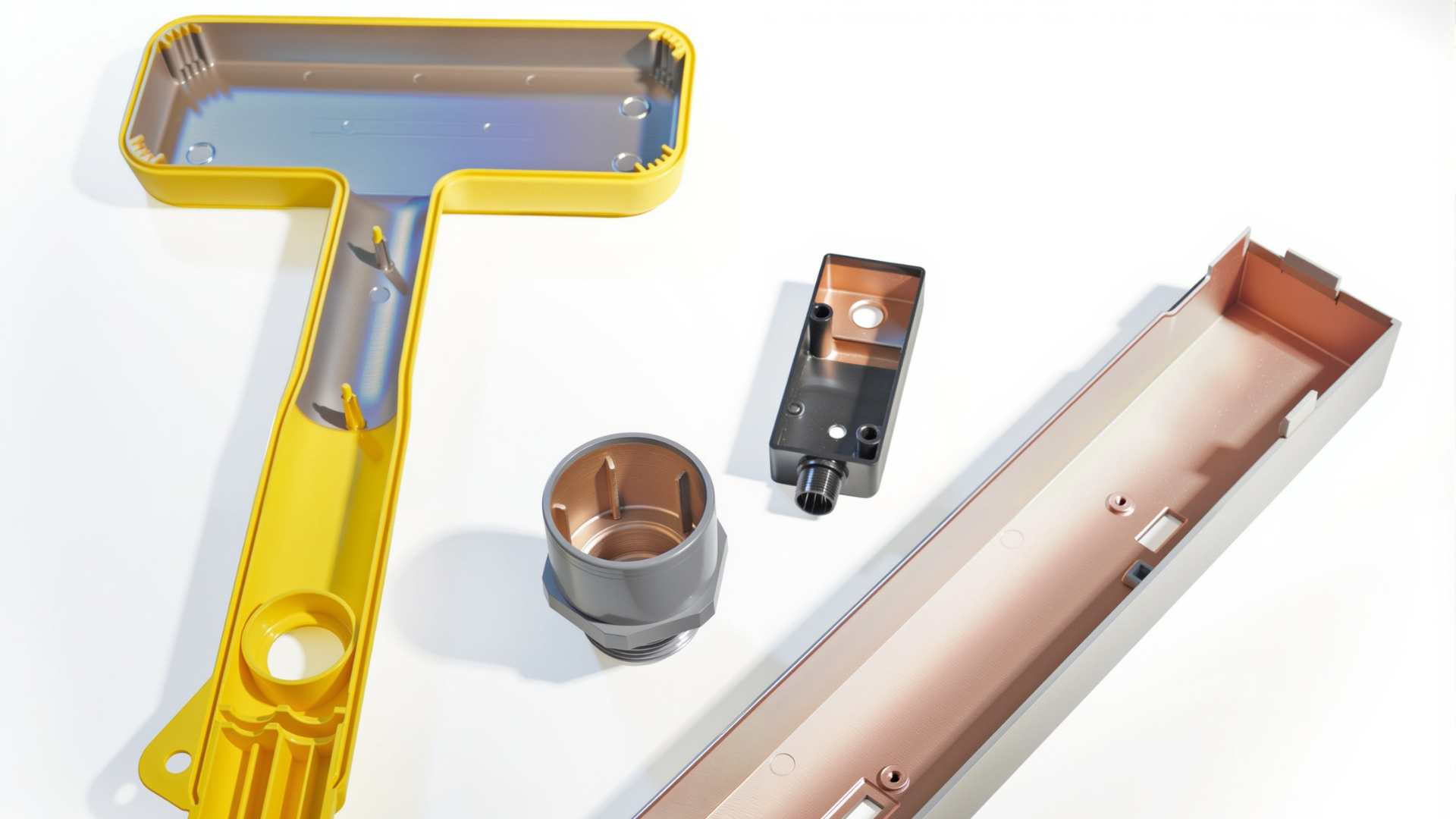
Automotive EMI shielding protects electronic control units (ECUs), ADAS sensors and infotainment systems by adding a conductive layer to otherwise electromagnetically transparent plastic housings. Vacuum metalized aluminum and conductive spray coatings turn a lightweight polymer enclosure into an effective shield, with conductive sprays delivering 40–80 dB of attenuation and vacuum metalized aluminum exceeding 60 dB. For EV platforms in particular, where high-voltage switching creates a far noisier electromagnetic environment, coated housings are one of the most cost-effective ways to keep modules compliant.
Why EVs Raise the EMI Stakes
An electric vehicle is a dense collection of high-power switching electronics. Traction inverters chop hundreds of volts at high frequency, and DC-DC converters and onboard chargers add their own broadband noise. At the same time, the vehicle carries more sensitive electronics than ever: radar and camera modules, GNSS receivers, telematics units and multi-display digital cockpits, all packed into a shrinking package space.
Designers reach for plastic housings because every kilogram matters for range, and injection-molded ABS, ABS/PC or polycarbonate enclosures are lighter and cheaper than die-cast metal. The trade-off is that bare plastic provides essentially no shielding. A conductive coating restores the shielding performance of metal while keeping the weight, cost and design freedom of a molded part. Mueller Coatings applies these coatings through its EMI/RFI/ESD shielding service.
The Modules That Need Shielding Most
ECUs and power electronics controllers
Engine, battery-management and body-control ECUs both emit switching noise and must survive the emissions of neighboring systems. A coated housing addresses radiated emissions and improves immunity in one step, without changing the PCB. Zonal architectures are accelerating the trend, concentrating more functions into fewer, more powerful controllers — which raises clock speeds and, with them, the emissions profile of each box.
ADAS sensor modules
Radar, camera and ultrasonic modules work with very small signal levels, so even modest interference can degrade detection performance. Selective shielding of the housing — with masked windows for the sensor aperture — isolates the receiver electronics from the rest of the vehicle.
Infotainment and telematics
Head units combine cellular, Wi-Fi, Bluetooth and GNSS radios with high-speed digital processing in one box. Shielding coatings help keep the digital noise floor away from the antennas and keep the module within radiated-emissions limits.
Coating Options: Vacuum Metalized Aluminum vs. Conductive Spray
| Attribute | Vacuum metalized aluminum | Conductive spray |
|---|---|---|
| Typical thickness | 0.5–25 microns | 1–2 mils (25–50 microns; up to 10 mils) |
| Attenuation | Greater than 60 dB | 40–80 dB |
| Conductive material | Pure aluminum | Nickel-, copper- or silver-based |
| Best fit | Thin, uniform coverage on tight-tolerance parts; high-volume programs | Selective application, complex geometry, easy masking of grounding zones |
The vacuum metalizing process deposits an extremely thin, uniform aluminum film, which is valuable when connector bosses and snap features cannot tolerate added thickness. Conductive spray coatings allow the applicator to build thickness where it is needed and to select nickel, copper or silver chemistry based on conductivity and galvanic-compatibility requirements.
Validating Shielding for Automotive Programs
Automotive programs expect supplier discipline, and shielding coatings are no exception. Mueller Coatings supports PPAP-style validation packages: documented process parameters, coating-thickness and adhesion data, attenuation test results and control plans that give your supplier-quality team the evidence it needs. Production runs under an ISO 9001:2015 quality management system, with fixtures designed and built in-house so that masking and grounding contact areas repeat part after part.
Substrates and Design Considerations
Common automotive housing materials — ABS, ABS/PC, polycarbonate and nylon (PA) — all coat well. A few details determine real-world performance: a reliable grounding path from the coating to chassis or PCB ground, controlled seams and apertures at housing joints, and masking of areas that must remain non-conductive. ESD-sensitive assemblies benefit from the same coatings, which bleed static charge safely to ground instead of letting it find a path through components. It pays to review CAD with the coating engineer early, so rack points and mask lines land where they will not show and where electrical contact is guaranteed by the assembly’s own fastening hardware. Because there is no minimum order quantity, the same process can cover a 50-piece design-validation build and a multi-million-piece production program.
Work with Mueller Coatings. Since 1955, Mueller Coatings has finished more than 50 million parts a year from its 65,000 sq. ft. facility in East Bridgewater, Massachusetts. If you are developing an ECU, ADAS module or infotainment enclosure that needs shielding, request a quote and our applications team will help you select the right coating.
Does a shielding coating add meaningful weight or thickness?
No. Vacuum metalized aluminum measures 0.5–25 microns and conductive sprays 1–2 mils (25–50 microns; up to 10 mils), so neither disturbs part tolerances or assembly fits in a typical housing.
Can shielding be applied to only part of a housing?
Yes. In-house fixtures and masking allow selective coating, so sensor windows, antenna zones and cosmetic surfaces stay uncoated while the shielded cavity is fully covered.
What quality documentation supports automotive programs?
Mueller Coatings operates under ISO 9001:2015 and AS9100:2016 quality systems and supports automotive customers with PPAP-style validation documentation — process parameters, measurement data and control plans — tailored to each program’s requirements.