Chrome Plating vs. Vacuum Metalizing: Cost, Weight & Durability Compared

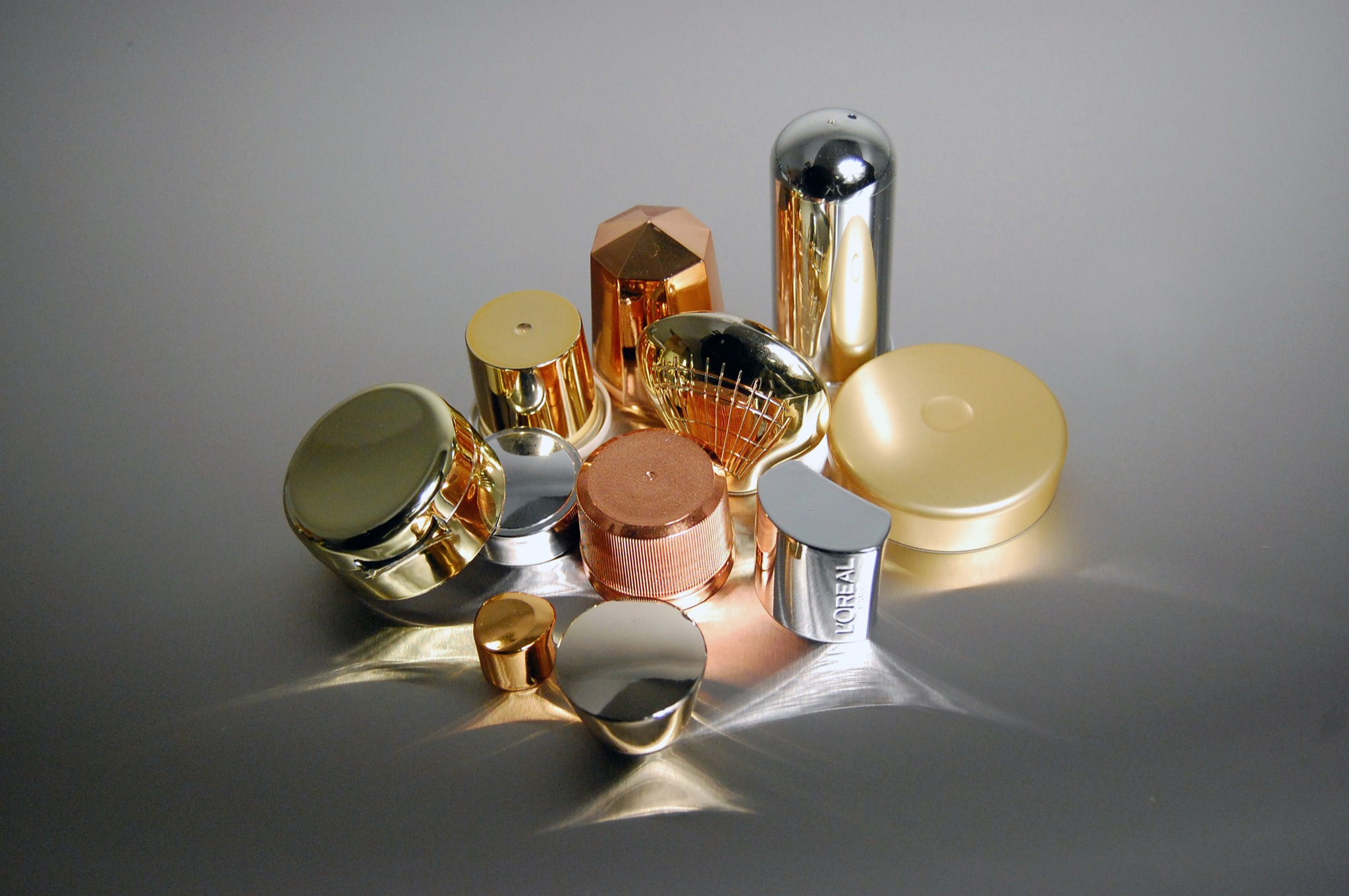
Vacuum metalizing is the most practical chrome plating alternative for plastic parts. It deposits a thin film of pure aluminum onto the part inside a vacuum chamber, producing a mirror-bright finish without hexavalent chromium chemistry, without the added mass of electroplated metal layers, and with excellent uniformity on complex geometry. Traditional chrome electroplating still earns its keep on metal parts that need extreme surface hardness, but for decorative and most functional finishes on plastic, metalizing typically wins on cost, weight, and environmental compliance.
How the Two Processes Work
Decorative chrome electroplating on plastic is a wet-chemistry process. The part is etched, seeded with a catalyst, plated with electroless nickel to make it conductive, then built up through successive copper, nickel, and chromium baths. Each bath adds metal, time, and process risk, and the final chromium layer has historically relied on hexavalent chromium chemistry.
Vacuum metalizing is a dry, physical process. Parts are cleaned, coated with a basecoat, and loaded into a vacuum chamber where aluminum is evaporated and condenses onto every exposed surface as a film just 0.5–25 microns thick. A clear or tinted topcoat then seals and protects the aluminum. The result is a brilliant, chrome-like finish achieved with a fraction of the material and none of the plating-line effluent.
Side-by-Side Comparison
| Factor | Chrome Electroplating | Vacuum Metalizing |
|---|---|---|
| Process type | Multi-bath wet chemistry | Dry physical vapor deposition |
| Coating build | Multiple stacked metal layers | 0.5–25 micron aluminum film |
| Weight added | Meaningful on large or thin-walled parts | Negligible |
| Environmental profile | Hexavalent chromium restrictions, wastewater treatment | No hexavalent chromium, no plating effluent |
| Complex geometry | Current-density hot spots; recesses plate thin | Uniform line-of-sight coverage with proper fixturing |
| Substrate range | Mostly plating-grade ABS and ABS/PC | ABS, ABS/PC, polycarbonate, nylon, PET, PP, glass, metal, 3D-printed parts |
| Surface hardness | Very high; best for heavy wear | Governed by topcoat; good for decorative and light functional wear |
| Typical cost driver | Bath maintenance, compliance, rework | Fixturing and racking density |
The Hexavalent Chromium Problem
The strongest argument for a chrome plating alternative is regulatory. Hexavalent chromium is a known carcinogen, and its industrial use faces tightening restrictions: authorization requirements under EU REACH, strict occupational exposure limits from OSHA, and mounting wastewater-treatment obligations. Many OEMs now write hexavalent chromium out of their supplier requirements entirely. Vacuum metalizing sidesteps the issue completely — the reflective layer is pure aluminum deposited in a vacuum, with no plating baths and no chromium chemistry anywhere in the process.
Weight Savings on Plastic Parts
Electroplating builds real metal mass onto a part — copper, nickel, and chromium layers that are orders of magnitude thicker than a metalized film. On automotive trim, drone housings, wearables, or any weight-sensitive assembly, that mass works against you. A metalized aluminum layer at 0.5–25 microns adds essentially nothing to part weight, so designers get the bright-chrome appearance while keeping the mass budget of molded plastic. The thin film also preserves dimensional tolerances on snap fits and mating features that thick plating can compromise.
Uniformity on Complex Geometry
Electroplating deposits metal according to current density, which concentrates on edges and outside corners and starves recesses. Deep grilles, louvers, and interior pockets plate thin or require costly auxiliary anodes. Vacuum metalizing deposits by line of sight from the evaporation source, so with well-designed rotation and fixturing — Mueller builds its fixtures in-house — complex shapes coat evenly, edge to edge. For decorative metalized finishes on styled housings, bezels, and trim, that uniformity shows up directly in first-pass yield.
When Chrome Plating Still Makes Sense
Honesty matters here: hard chrome on steel hydraulic rods, tooling, and heavy-wear surfaces is not a job for metalizing. If the part is metal and the requirement is extreme abrasion resistance, plating or an engineered coating is the right call. But for decorative brightwork on plastic — and for functional films like EMI/RFI shielding, where metalized aluminum delivers greater than 60 dB attenuation — vacuum metalizing is the lower-cost, lighter, cleaner choice.
Work with Mueller Coatings
Mueller Coatings has been finishing parts since 1955 from a 65,000 sq. ft. facility in East Bridgewater, Massachusetts, metalizing more than 50 million parts annually with no minimum order quantity. If you are evaluating a chrome plating alternative for a current or upcoming program, request a quote and our team will review your part geometry, substrate, and finish targets.
Is vacuum metalizing as durable as chrome plating?
For decorative and light functional use, yes — durability is set by the protective topcoat, which is selected to meet your abrasion, chemical, and weathering requirements. For heavy mechanical wear on metal parts, electroplated hard chrome still outperforms.
Can vacuum metalizing match the look of real chrome?
Yes. Evaporated aluminum is highly specular, and under a clear topcoat it is visually indistinguishable from bright chrome on most parts. Tinted topcoats extend the palette to gold, black chrome, and custom colors.
How large a part can be metalized?
Mueller’s vacuum chambers accept parts up to 24 inches in diameter and 60 inches long, and fixtures are engineered in-house to maximize racking density and coverage.