Metalized Heat Shields for Aerospace Components: Reflecting Radiant Heat Without the Weight

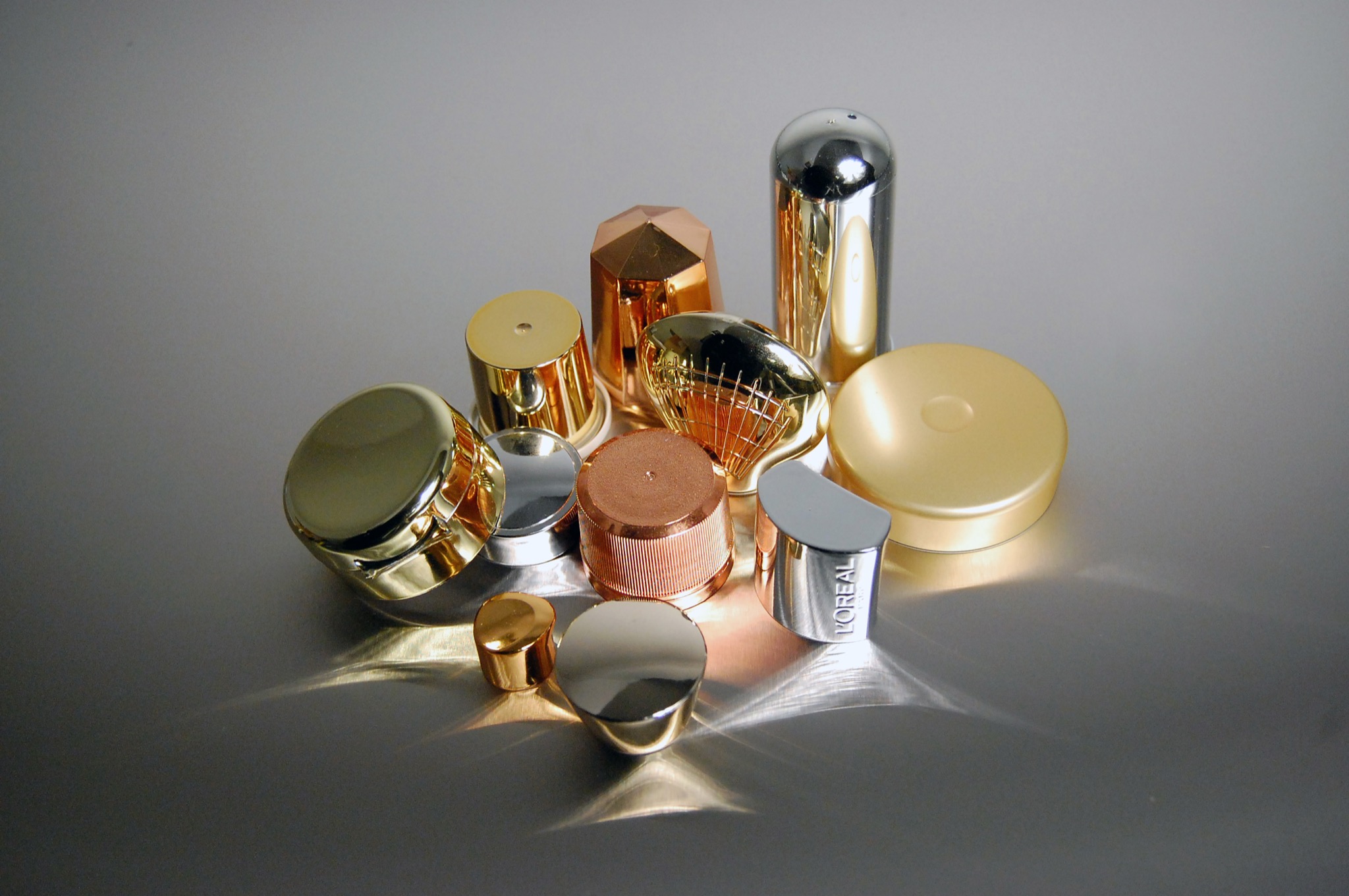
Aerospace heat shields have always traded weight for protection: a stamped metal shield and its fasteners keep radiant heat off a sensitive component, but every gram counts against the aircraft. A metalized heat shield coating takes a different route. A thin, highly reflective metal film is vacuum-deposited directly onto the part you already have — a molded housing, a composite panel, a duct — so the component reflects radiant heat itself, with essentially no added mass and no extra part to install.
Where Radiant Heat Is the Problem
Heat moves by conduction, convection, and radiation. In many aircraft, UAV, and spacecraft assemblies, the load that damages a nearby plastic or composite part is radiant: infrared energy from power electronics, engine-adjacent hardware, or direct solar exposure. A bright, specular metal surface reflects that energy before the substrate can absorb it. That is the job a metalized heat shield coating does — and why it is most effective where radiation, rather than direct contact, is the dominant heat path.
Typical aerospace candidates include avionics and sensor housings mounted near heat-producing equipment, environmental control system (ECS) ducting, interior close-out panels, satellite and antenna components, and UAV airframe parts where every gram of shielding comes straight out of payload or endurance.
How the Coating Is Applied
Parts are fixtured and loaded into a vacuum chamber, where a metal is evaporated and condenses onto the part as a uniform, mirror-bright film. A basecoat is applied first so the metal deposits onto a smooth, well-bonded surface, and a protective topcoat seals it against abrasion, handling, and the operating environment. The result is a reflective surface that follows complex molded geometry — ribs, bosses, and recesses that a stamped shield cannot reach. More detail on the process is on our reflective and functional vacuum metalizing page.
Metalized Coating vs. a Discrete Metal Shield
| Attribute | Metalized heat shield coating | Discrete metal shield |
|---|---|---|
| Weight added | Negligible — a film measured in microns | A separate formed part plus fasteners |
| Geometry | Follows complex molded and composite shapes | Limited to what can be stamped or formed |
| Part count | Built into an existing component | One more part to source, inspect, and install |
| Radiant heat | Highly reflective, protected by a topcoat | Reflective when clean; can degrade as the surface oxidizes |
| Conducted and convected heat | Limited on its own — pair with an air gap or a thermal barrier coating | Effective when designed with an air gap |
The honest engineering answer: when the load is mainly radiant, a metalized coating can often replace a discrete shield outright. When conduction or convection matters too, the coating becomes one layer of a thermal management stack rather than the whole solution.
Pairing Reflection with a Thermal Barrier
For components that see both radiant and conducted heat, the two jobs can be split. Mueller applies spray-applied thermal barrier coatings to protect substrates in high-heat environments, alongside vacuum metalized reflective surfaces — and because both processes run under one roof, the stack can be developed, fixtured, and documented as a single program rather than split across vendors.
What Aerospace Programs Need from the Coating Supplier
- Certified quality system. Mueller Coatings is AS9100D and ISO 9001 certified and ITAR registered.
- Traceability and documentation. Full process documentation and traceability for flight-hardware first-article and audit expectations.
- Masking precision. Bond lines, gasket faces, and attachment points that must stay uncoated are masked with fixtures designed and built in-house.
- Substrate range. Engineering plastics, composites, glass, and 3D-printed parts can all be metalized — match the substrate’s temperature capability to the environment.
- Scale. Support from prototype and qualification builds through production volumes.
Frequently Asked Questions
Can a metalized coating fully replace a metal heat shield?
When the thermal load is primarily radiant, often yes. Where conducted or convected heat is significant, use the coating with an air gap or a thermal barrier coating as part of the overall thermal design.
Does the coating add measurable weight?
No meaningful weight. The reflective film is measured in microns, which is why the approach is attractive against formed metal shields on weight-sensitive aircraft and UAV programs.
Can composite and 3D-printed parts be coated?
Yes. Composites, engineering plastics, and 3D-printed parts are all candidates, which lets teams test a reflective solution on prototype hardware before committing to production tooling.
Work with Mueller Coatings
Mueller Coatings has supported aerospace and defense programs from its East Bridgewater, Massachusetts facility for decades, with coatings used across fixed-wing aircraft, UAVs, satellites, radar systems, and avionics. See our aerospace and defense coating solutions, or send us the part and the thermal problem through our quote request form and an applications engineer will follow up with a practical approach.