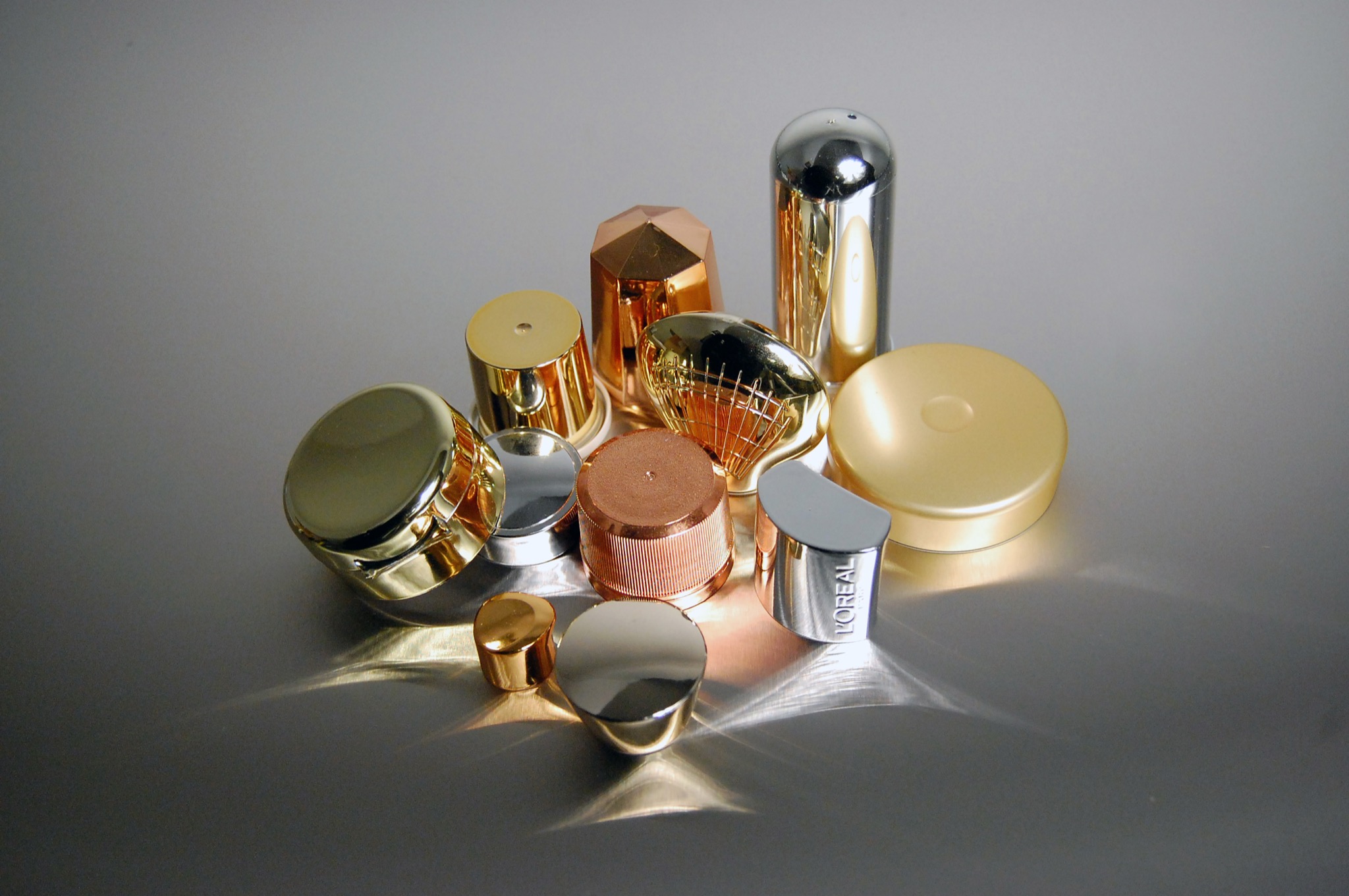
Custom Color Chrome: Gold, Black, and Tinted Metalized Finishes Explained
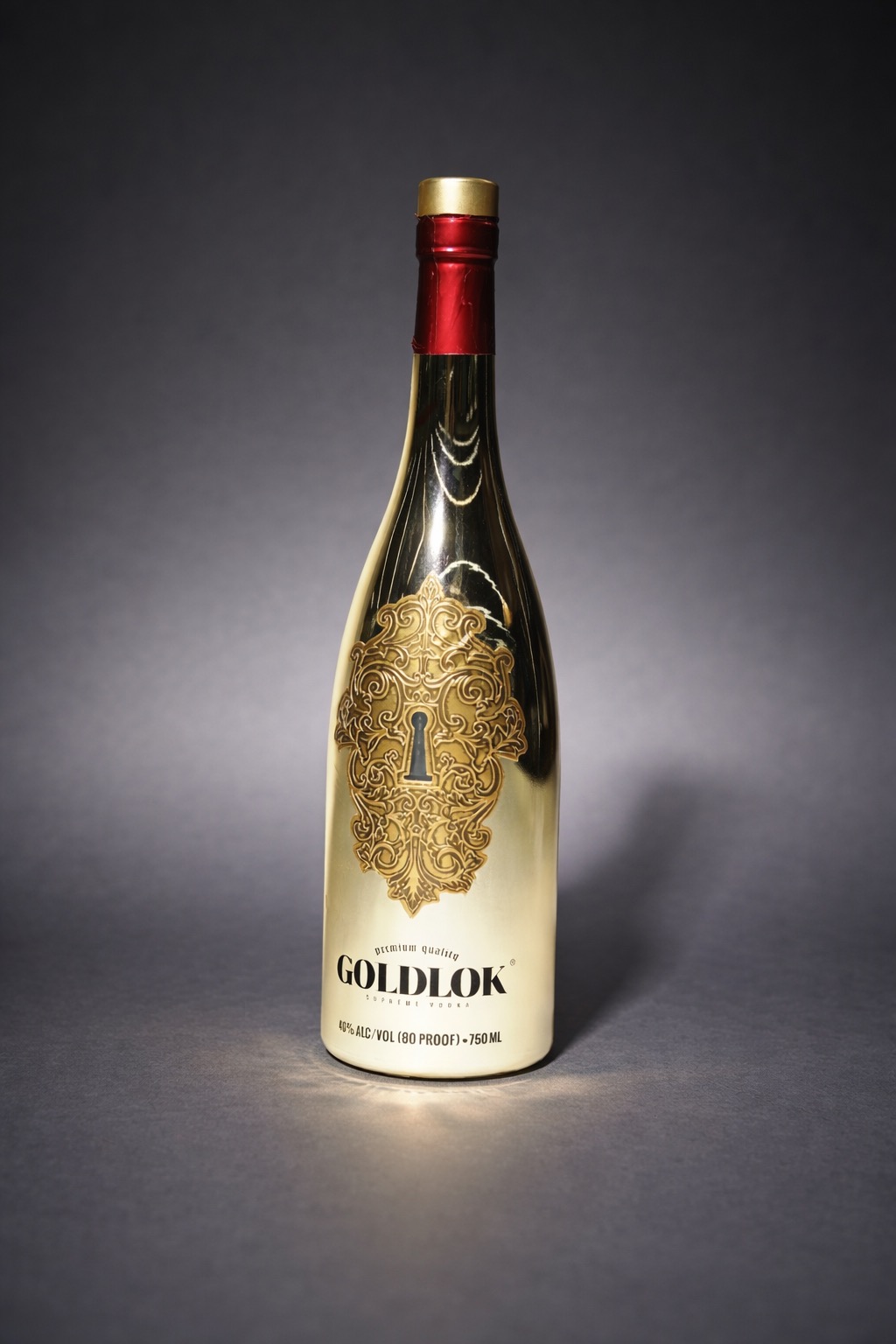
A colored chrome finish is created by applying a transparent tinted topcoat over vacuum metalized aluminum. The aluminum layer provides the mirror-like metallic depth; the tint layered above it shifts the color to create finishes ranging from warm gold and smoked black chrome to blues, reds, and other custom hues, while the reflection still comes from the metal beneath. That is why tinted metalized finishes have a luminous quality that pigmented metallic paints cannot match.
How a Colored Chrome Finish Is Built
Every tinted metalized finish is a three-layer stack:
- Basecoat. A cured coating that prepares the surface for metalizing, promotes adhesion, and helps create a smooth foundation for the reflective finish. Because metalized finishes can highlight underlying surface imperfections, substrate quality and preparation are important.
- Metalized aluminum. A thin aluminum film deposited onto the part in a vacuum chamber, creating the reflective metallic appearance.
- Tinted topcoat. A transparent, dyed protective coating that adds the desired color while allowing the reflective metalized layer beneath to remain visible. The topcoat also helps protect the finish based on the performance requirements of the application.
Because the color is created primarily through the tinted topcoat, the same underlying metalizing process can be used to produce a wide range of finishes. Variations in the topcoat allow for finishes such as bright chrome, gold, black chrome, and other tinted colors while maintaining the reflective metallic appearance of the metalized layer beneath. Learn more about how the metal layer is applied on our vacuum metalizing technology page.
The Popular Families: Gold, Black Chrome, and Smoke
Gold tones. Amber-tinted topcoats over aluminum can produce finishes ranging from pale champagne to rich yellow gold. Adjusting the tint allows the color and warmth of the finish to be tailored to the desired appearance and reproduced consistently in production.
Black chrome. A gray-to-black translucent tint creates a gunmetal or smoked-chrome appearance commonly used for cosmetics, spirits packaging, and other premium consumer products. Unlike an opaque black finish, black chrome maintains the reflective metallic appearance of the metalized layer beneath.
Smoke and jewel tones. Lighter neutral tints yield subtle smoke finishes; saturated transparent dyes yield candy-like blues, reds, greens, and violets with metallic depth. These are heavily used in cosmetics caps, fragrance closures, and personal care packaging, where shelf differentiation is the whole point — see our decorative caps and closures coatings.
A Library of 50+ Finishes — and Custom Matching
Mueller maintains a library of more than 50 metalized finishes spanning bright chrome, golds, black chrome, smokes, and tinted colors. For programs requiring a specific color or brand appearance, Mueller's team can develop custom-tinted finishes based on an approved color standard or physical sample. Sampling and approval help establish the desired appearance before moving into production. Color matching a transparent tint over a metalized layer differs from matching an opaque paint because the reflectivity of the metalized layer, tint strength, and topcoat thickness can all influence the final appearance. Learn more about our decorative vacuum metalizing and painting capabilities.
Consistency at Production Volume
A colored chrome finish is only as good as its repeatability. Because the color comes from a controlled topcoat application rather than operator-blended paint, and the metal layer is deposited in a sealed chamber, tinted metalized finishes hold their appearance from the first article to the millionth part. Mueller finishes more than 50 million parts a year with no minimum order quantity, so the same finish system that decorates a 50-piece pilot run scales directly to full production. Appearance is verified under controlled lighting, and the topcoat simultaneously provides the abrasion and chemical resistance the finish needs in service.
Design Tips for Specifying Tinted Metalized Finishes
- Specify against a physical standard. Screen renderings of metallic color are unreliable; approve a sprayed sample plaque or part.
- Define viewing conditions. Metallic tints shift between daylight and store lighting — agree on the reference illuminant up front.
- Consider the substrate. ABS, polycarbonate, PET, PP, and even glass can carry the same finish family, but confirm compatibility early.
- Plan the finish family early. If a product line will include chrome, gold, black chrome, or other tinted variants, discuss the full finish family during development so the coating system and process can be designed with those variations in mind.
Work with Mueller Coatings
Since 1955, Mueller Coatings has helped brands and OEMs put distinctive metallic color on molded parts from its East Bridgewater, Massachusetts facility. Whether you need a standard finish from the library or a custom-matched tint, request a quote and our team will build sample options around your target.
Is a colored chrome finish durable enough for handled products?
Yes, when the coating system is selected for the intended application. The tinted topcoat helps protect the metalized finish and can be formulated to provide appropriate abrasion and chemical resistance based on the product's performance requirements.
Can you match our brand color?
Mueller Coatings offers custom color matching and brand-specific finish development. Our team can develop and sample tinted metalized finishes against an approved color standard or physical sample to establish the desired appearance before production.
Can colored chrome finishes be applied to different materials?
Yes. Decorative vacuum metalizing can be applied to a variety of substrates, including ABS, polycarbonate, PET, polypropylene, and glass. Substrate compatibility should be evaluated during development to determine the appropriate coating system for the application.